
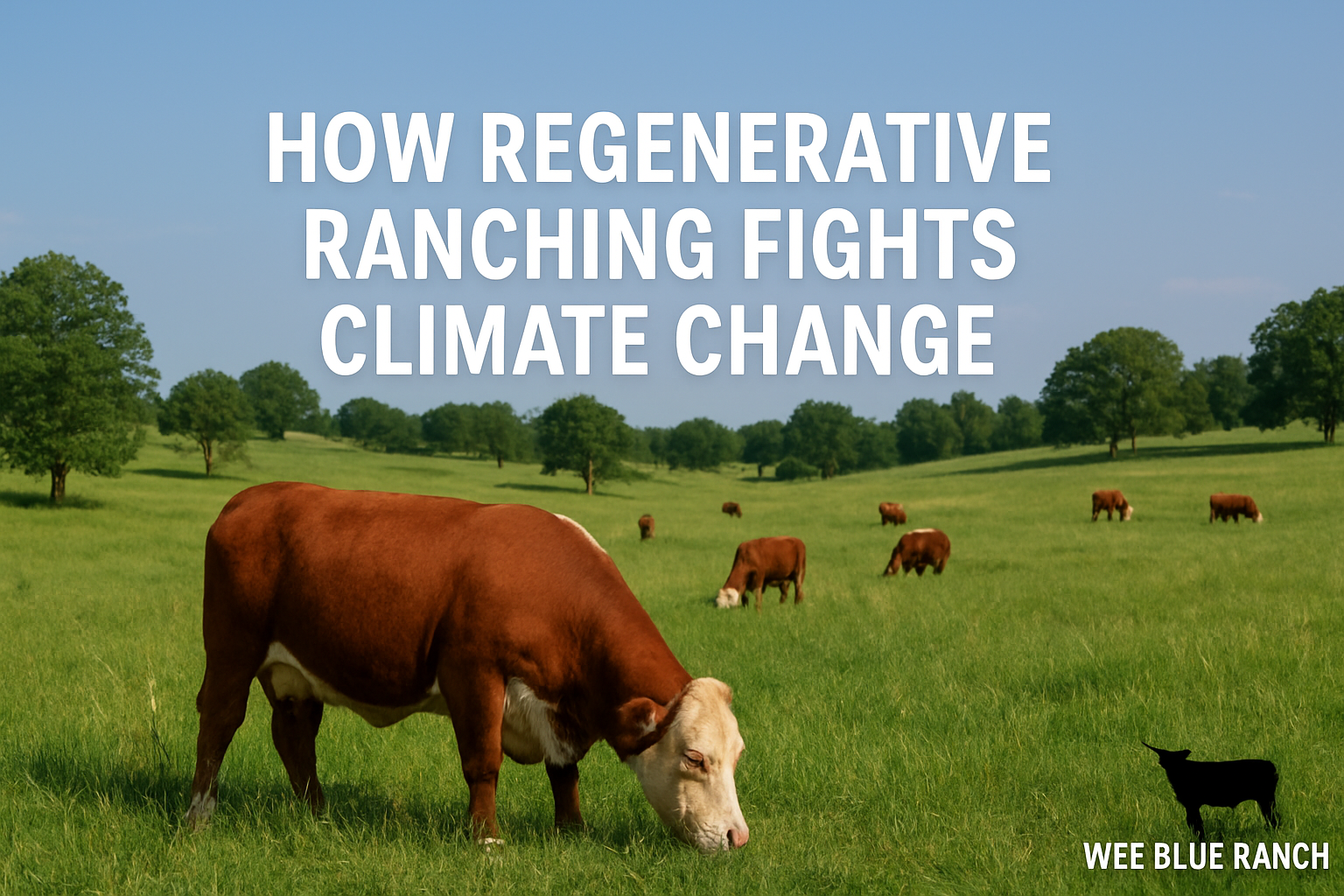
Climate change is one of the defining challenges of our time. From rising global temperatures to droughts, floods, and soil degradation, our food systems are under increasing pressure. Agriculture—especially conventional beef production—is often highlighted as part of the problem. But at Wee Blue Ranch, we believe cattle can also be part of the solution.
Through regenerative ranching, we’re proving that beef raised on grass in harmony with nature doesn’t just nourish people—it can also restore ecosystems, capture carbon, and help fight climate change. As an Oklahoma beef ranch, our mission is to provide nutritious, sustainable, grass-fed beef while actively improving the land for future generations.
At its core, regenerative ranching is about working with natural systems instead of against them. It’s a holistic approach to land management that emphasizes:
Unlike conventional feedlot beef, regenerative ranching allows cattle to be tools for land restoration. Managed properly, cows don’t deplete the land—they help regenerate it.
Healthy grasslands act as massive carbon sinks. When cattle graze rotationally, their hooves aerate the soil and their manure adds nutrients, encouraging deep-rooted grasses. These roots store carbon underground for decades, helping offset greenhouse gas emissions.
Conventional agriculture relies heavily on synthetic fertilizers, pesticides, and herbicides—all of which emit greenhouse gases during production and application. At Wee Blue Ranch, our Oklahoma grass-fed beef is raised on chemical-free pastures, allowing the soil’s natural microbiome to thrive and reducing emissions.
Extreme weather events—like droughts and floods—are more common with climate change. Healthy soils created through regenerative practices absorb more water during heavy rains and retain moisture during droughts. This makes Oklahoma beef ranches like ours more resilient to shifting weather patterns.
Climate change threatens countless species. Regenerative ranching fosters diverse habitats, from native grasses to pollinator pathways, creating ecosystems that are stronger and more adaptable to climate shifts.
Many consumers ask: Does grass-fed beef really make a difference? The answer is yes—both for your health and the planet.
Compared to grain-fed beef, Oklahoma grass-fed beef is:
By choosing sustainable beef, you’re not only supporting climate solutions but also bringing more nutrient-dense food to your table.
Oklahoma’s climate and landscapes are well-suited for grass-fed and regenerative ranching. The rolling prairies, fertile soils, and diverse forage options allow cattle to thrive on pasture without the need for feedlots or grain.
At Wee Blue Ranch, we’ve embraced this natural advantage by:
By combining tradition with innovation, Oklahoma ranchers are showing how beef can be both climate-smart and community-focused.
While regenerative ranching offers powerful climate benefits, it’s not without its challenges:
At Wee Blue Ranch, we embrace these challenges as opportunities to educate and innovate. We’re committed to transparency, continuous learning, and proving that beef can be part of the climate solution.
Every time you choose Oklahoma grass-fed beef from regenerative ranches, you’re:
It’s more than a purchase—it’s a partnership in climate action.
The fight against climate change demands bold, practical solutions. At Wee Blue Ranch, we believe regenerative ranching is one of those solutions. By combining time-tested grazing practices with a commitment to soil health, biodiversity, and sustainability, we’re proving that beef can regenerate the land, nourish communities, and help heal the planet.
When you choose Oklahoma grass-fed beef from a regenerative ranch, you’re investing in a healthier climate, stronger ecosystems, and better food. Together, we can reimagine the role of ranching—not as part of the problem, but as a powerful tool for climate resilience.
👉 Explore our Whole Beef Share and taste beef that’s good for you and the planet.