
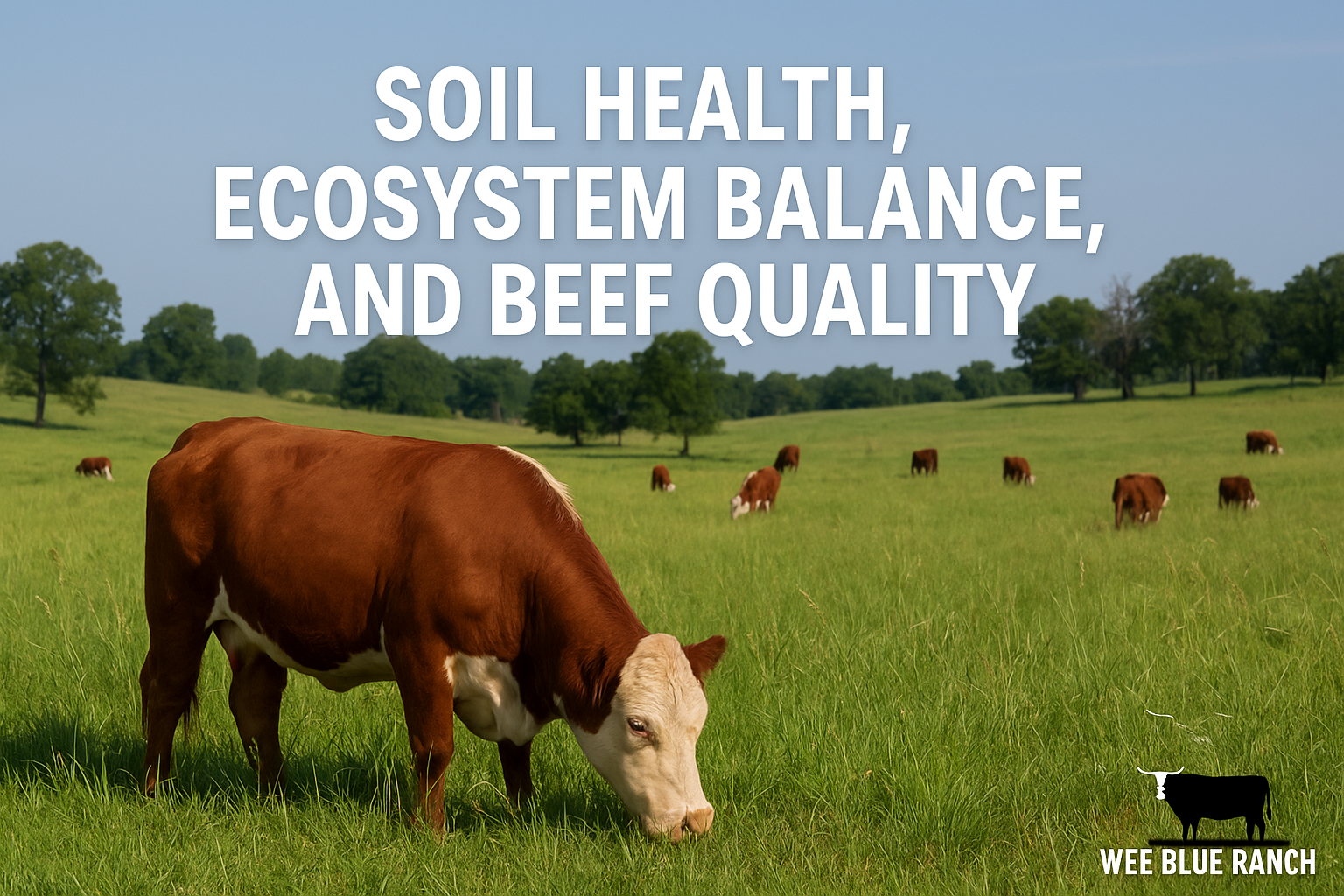
When most people think about beef, they picture flavor, tenderness, and nutrition. But the story of truly great beef starts long before it reaches your plate—it begins in the soil. At Wee Blue Ranch, we know that healthy soil creates healthy ecosystems, and healthy ecosystems create better beef.
By practicing regenerative ranching in Oklahoma, we focus on building soil fertility, restoring ecosystem balance, and raising grass-fed cattle that produce nutrient-rich, sustainable beef. In this article, we’ll explore how soil health and ecosystem management directly impact the quality of the beef we deliver to families across Oklahoma and beyond.
Soil is more than dirt—it’s a living ecosystem full of microbes, fungi, minerals, and organic matter. Healthy soil:
At our Oklahoma beef ranch, cattle aren’t just grazers—they’re land managers. Through rotational grazing, their movement mimics wild herds, stimulating root growth, aerating the soil, and spreading natural fertilizers. This cycle strengthens the soil, making it more resilient to climate extremes.
Ecosystem balance means creating harmony between plants, animals, and the environment. On a regenerative ranch like ours, every element plays a role:
Unlike feedlots, which concentrate waste and damage ecosystems, our Oklahoma grass-fed beef is raised in open pastures where cattle regenerate the land instead of depleting it.
Balanced ecosystems also manage water more effectively. Deep-rooted grasses pull moisture into the soil, reducing runoff and flooding. In dry Oklahoma summers, this means greener pastures and healthier cattle. By fostering ecosystem balance, regenerative ranching ensures both environmental sustainability and food security.
Healthy soil grows nutrient-rich forage, and nutrient-rich forage raises healthier cattle. Compared to grain-fed beef, grass-fed beef offers:
This is why Oklahoma grass-fed beef from regenerative ranches isn’t just sustainable—it’s more nutritious for your family.
The connection between soil, ecosystem health, and beef quality is also about taste. Cattle grazing on diverse pastures develop richer, more complex flavors than grain-fed cattle. The result is beef that’s tender, juicy, and uniquely reflective of the land it’s raised on.
At Wee Blue Ranch, we’re proud that our focus on soil and ecosystems translates into beef that’s not only sustainable but also exceptional in flavor.
Oklahoma’s prairies and climate make it an excellent place for regenerative beef production. With abundant native grasses and resilient ecosystems, cattle thrive without the need for industrial feed.
At our ranch, we:
By aligning with the natural strengths of Oklahoma, we can produce sustainable, climate-smart beef that benefits both land and community.
Healthy soils and balanced ecosystems do more than improve beef quality—they help fight climate change. By storing carbon, reducing chemical dependency, and improving water retention, regenerative ranching provides long-term environmental benefits.
Choosing Oklahoma grass-fed beef isn’t just about flavor and nutrition—it’s a way for families to directly support climate-friendly food systems.
Transitioning to regenerative ranching comes with challenges:
But the opportunities far outweigh the challenges. By investing in soil health, ecosystem balance, and beef quality, ranchers can build more resilient businesses, healthier communities, and a better future for food production.
Every purchase of Oklahoma grass-fed beef supports:
It’s a choice that benefits your health, your community, and the planet.
The journey to better beef begins in the soil. At Wee Blue Ranch, we believe that soil health, ecosystem balance, and beef quality are inseparable. By practicing regenerative ranching, we’re creating beef that is flavorful, nutrient-dense, and climate-smart.
When you choose Oklahoma grass-fed beef from our ranch, you’re choosing more than dinner—you’re choosing a future where ranching heals the land, nourishes people, and restores ecosystems.
👉 Explore our Whole Beef Share and experience beef raised with care for the soil, the ecosystem, and your family.